
.jpg)
Adaptations
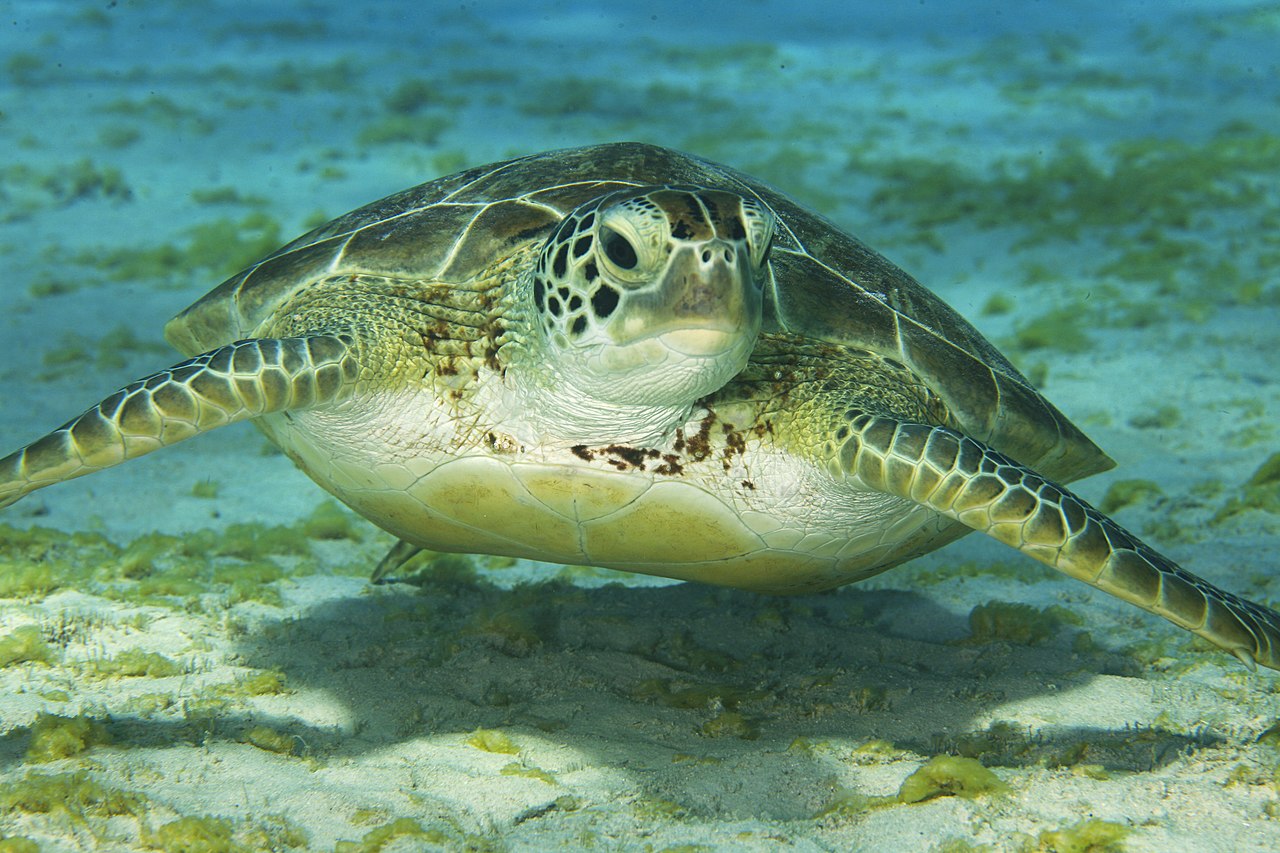
Front flippers provide efficient propulsion, and a streamlined shell reduces drag. Adults commonly graze seagrass and algae, a diet that differs from the more carnivorous diet of young turtles.
Behavior and daily life
Green sea turtles spend most of their lives in coastal waters and the open ocean. Adult females return to sandy beaches to nest, often in the same broad region where they hatched.
Conservation
Current profile labelSee current reference
Conservation conditions vary across the species range. Follow the linked background reference for the latest assessment and regional guidance.
Adults can migrate long distances between feeding areas and nesting beaches.