
Adaptations
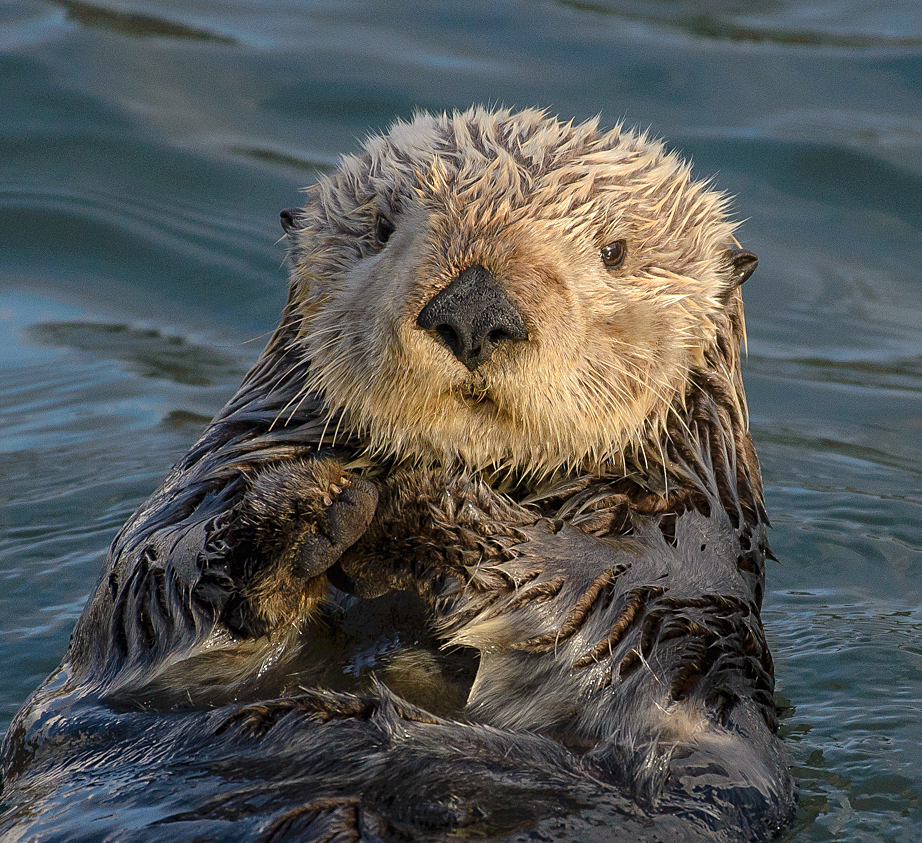
Dense fur traps insulating air, large lungs add buoyancy, and sensitive paws and whiskers help locate prey. Otters can carry a favored stone or food in loose skin beneath a forelimb.
Behavior and daily life
Sea otters rest, groom, feed, and sometimes give birth at the surface. They may form floating groups called rafts, and meticulous grooming is essential because clean fur maintains its insulating air layer.
Conservation
Current profile labelEndangered
Oil spills, entanglement, disease, prey change, predation, and historical hunting have affected different populations. Recovery is uneven across the North Pacific and requires region-specific monitoring.
Sea otters rely on exceptionally dense fur rather than a thick blubber layer for insulation.


_(25169790524)_crop.jpg)