
Adaptations
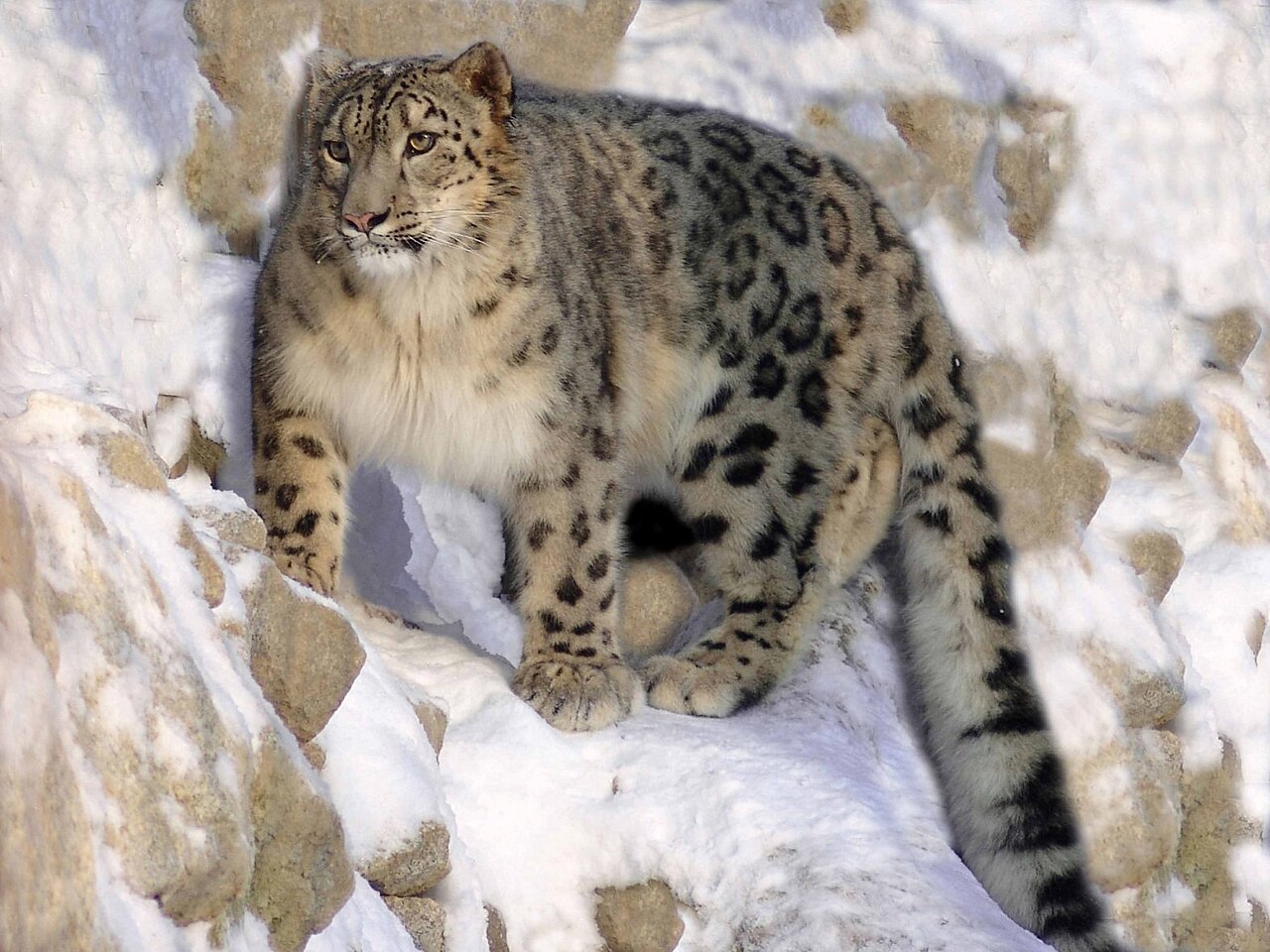
Wide fur-covered paws spread weight on snow, short rounded ears reduce heat loss, and an enlarged nasal passage helps condition cold air. Powerful hind limbs support long leaps across broken rock.
Behavior and daily life
Snow leopards are mostly solitary outside breeding and family periods. They use ridgelines, cliffs, scent marks, and scrapes to move through and communicate across large mountain home ranges.
Conservation
Current profile labelVulnerable
Retaliatory killing, loss of wild prey, illegal trade, mining, roads, and climate-driven habitat change affect snow leopard landscapes. Cross-border monitoring and livestock protection programs are important because populations span national boundaries.
A snow leopard's long tail helps with balance and can wrap around the body while the cat rests in cold conditions.


